Football Manager 2026: Deep Dive into New Features and Gameplay

Football Manager 2026 arrives with a familiar challenge: turn information into better football decisions. As a football management simulation developed by Sports Interactive, the series sits between strategy game, data platform, and virtual sporting director experience. Every choice connects to another, from the tactical system selected on match day to the wage structure that determines which players a club can retain.
Because the final feature set, release information, and platform details should be checked against official announcements, this deep dive focuses on the gameplay priorities players can reasonably expect and the systems that will matter most in a new save.
What Football Manager 2026 Aims to Deliver
Football Manager 2026 aims to deliver a deeper, more readable, and more connected management experience. Its value will depend on how effectively recruitment, tactics, player development, club finances, and match preparation work together rather than on any single headline feature.
The modern Football Manager audience expects realism, but realism alone is not enough. A simulation can contain thousands of variables and still feel frustrating if the game does not explain why a decision succeeded or failed. The strongest direction for Football Manager 2026 would therefore combine detailed systems with clearer feedback.
That means a manager should be able to understand the chain behind a result. A narrow defeat might stem from poor defensive spacing, an unsuitable role, tired midfielders, or a recruitment gap. The game becomes more rewarding when its reports, match visuals, and staff advice help separate those causes.
For returning players, meaningful progress may come through better workflows rather than dramatic reinvention. Faster navigation, more useful inbox recommendations, and clearer squad information can save time without reducing strategic depth. Newcomers, meanwhile, need a manageable route into a famously complex game.
Players seeking an authoritative overview of the franchise can also consult the Football Manager Wikipedia entry, while remembering that confirmed Football Manager 2026 details should come from Sports Interactive and official platform channels.
New Features and Interface Improvements
Interface improvements should make Football Manager 2026 easier to interpret without turning decisions into automatic actions. The ideal interface surfaces the right information at the right time, while leaving the manager responsible for judging risk and priority.
A useful design test is the three-question rule: What changed? Why does it matter? What can I do next? For example, a notification about declining morale should connect to playing time, promises, training workload, or a contract dispute. A transfer recommendation should show tactical fit, financial cost, registration implications, and development upside.
Decision support without decision replacement
Improved dashboards could bring together squad depth, role coverage, contract expiry dates, injuries, and recruitment targets. This would help managers identify problems before the transfer window becomes urgent. Filters also matter. A manager searching for a left-footed centre-back should be able to combine age, salary, tactical role, personality, injury record, and adaptability.
There is a trade-off. More automation can reduce repetitive administration, but excessive automation risks making the player feel like an approver rather than the club’s decision-maker. The best approach gives users control over which responsibilities remain manual.
- Inbox clarity: group related decisions and show deadlines prominently.
- Squad views: reveal role coverage, registration status, contracts, and development pathways.
- Staff delegation: explain exactly what an assistant manager or chief scout will handle.
- Match preparation: connect opposition reports to practical tactical options.
Gameplay and the Match-Day Experience
Football Manager 2026 gameplay will live or die through the relationship between tactical intent and the match engine. Managers need to see how roles, instructions, player attributes, condition, and opposition behaviour combine during a match.
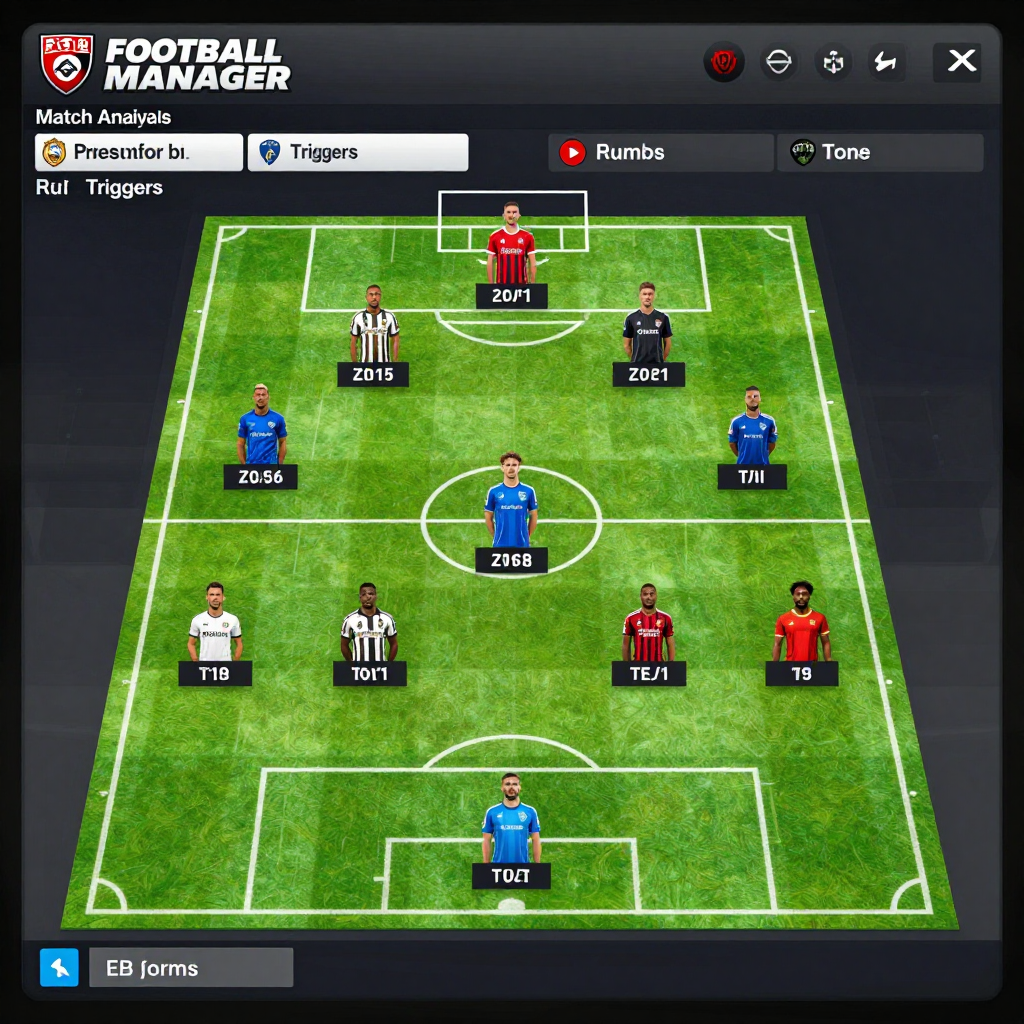
A tactical system should communicate more than formation numbers. A 4-3-3 can become a patient possession structure, an aggressive pressing shape, or a cautious counterattacking setup depending on roles and team instructions. The important question is whether players occupy useful spaces and whether the system survives transitions.
Match preparation should also reward specific planning. If an opponent overloads one flank, the manager might ask a winger to track back, narrow the full-back’s starting position, or use a midfielder to cover the half-space. Each adjustment should carry a cost. Protecting one area can reduce width elsewhere or weaken the counterattack.
The match engine needs to make these relationships legible. Visual cues, analytical summaries, and post-match feedback can help managers identify whether chances came from cutbacks, set pieces, defensive errors, or individual quality. That feedback matters more than simply adding extra visual effects.
Scenario: adapting during a difficult match
Imagine a mid-table side losing 1-0 because its advanced midfielder is isolated. A sensible response might involve lowering a forward into build-up, instructing the full-back to overlap, and reducing the tempo enough to create better support angles. The change may improve possession while making the team more vulnerable to counters. Football Manager is strongest when that compromise feels understandable rather than random.
Transfers, Scouting, and Squad Building
Transfers and scouting in Football Manager 2026 should reward strategic recruitment rather than lists of highly rated players. The most valuable signing is the player who solves a specific football and financial problem without damaging the squad’s long-term balance.
Recruitment begins with a clear brief. Before searching the transfer market, define the role, preferred attributes, age range, salary limit, registration rules, and expected pathway. A club needing a ball-winning midfielder for immediate promotion should not use the same criteria as a rebuilding team seeking resale value.
Scouting information also needs context. A report should distinguish between current ability, potential, tactical suitability, consistency, injury risk, personality, and adaptation concerns. One scout’s positive recommendation cannot remove uncertainty, especially when a player is moving between leagues with different tempo and physical demands.
- Immediate need: can the player improve the starting XI this season?
- System fit: does the player suit the tactical system and likely match roles?
- Squad fit: will the signing block a prospect or create a dressing-room imbalance?
- Financial fit: can the club absorb wages, bonuses, agent fees, and instalments?
- Future value: does the player offer development, leadership, or resale potential?
Contracts deserve equal attention. A low transfer fee can hide expensive wages, appearance bonuses, or an inflexible deal. Conversely, selling a valuable player too quickly may weaken promotion chances and cost more than the fee generates. Strong squad building treats every transfer as part of a multi-season plan.
Player Development and Club Management
Player development depends on the interaction between training, playing time, coaching, facilities, personality, and club strategy. Football Manager 2026 should encourage managers to build development plans that reflect real opportunities rather than assigning every prospect the same role.
A young midfielder who trains as a playmaker but rarely enters matches may progress differently from one receiving regular minutes in a lower-pressure role. Mentoring, tactical familiarity, physical load, and confidence can influence whether training translates into performance.
Delegation is another major part of club management. Coaches can manage training schedules, scouts can lead assignments, and directors can negotiate contracts, but delegation needs oversight. A staff member may recommend a player who fits the tactical profile yet exceeds the club’s wage structure. Automation saves time only when its boundaries are clear.
Club finances create the framework for every football decision. Wage budgets, transfer instalments, sponsorship income, facilities, staff costs, and attendance projections all affect sustainability. Spending aggressively for one promotion push may be rational, but it becomes dangerous if relegation or missed targets leaves the club with long contracts and reduced revenue.
A practical development framework
Use a simple cycle for each high-potential player:
- Define the destination: choose the position and role the player is most likely to fill.
- Check the pathway: identify first-team minutes, loan options, or competition from established players.
- Measure progress: review attributes, match performance, physical condition, and tactical understanding every few months.
- Reassess honestly: change the plan if the player’s strengths, weaknesses, or club circumstances shift.
The common mistake is treating potential as a guarantee. A highly rated prospect still needs the right environment, and a less celebrated player can become valuable through reliability and tactical fit.
Why Football Manager 2026 Matters for Football Esports Fans
Football Manager 2026 matters to football esports fans because it turns football knowledge into repeatable strategic decision-making. The competitive appeal lies in planning, adaptation, information management, and explaining why one approach beats another.
Unlike an action-focused football game, a football management simulation tests decisions across different time scales. A manager can win a match through a substitution, improve a season through training, or transform a club through recruitment conducted years earlier. That layered structure creates strong links with football analysis and esports audiences.
Competitive formats would also need careful design. If participants use different clubs, budgets, databases, or levels of information, comparisons become difficult. A credible competitive environment would need clear rules covering squad selection, save conditions, match settings, time limits, and whether external analysis tools are allowed.
Even outside formal tournaments, Football Manager supports an esports mindset. Players review opponents, identify repeatable patterns, test tactical hypotheses, and learn from failure. The difference is that the game rewards patience as much as speed.
For football media, the simulation offers another language for discussing recruitment, tactical identity, squad planning, and club finances. It should still be treated as a model rather than a prediction engine. Real football includes human relationships and uncertainty that no database can reproduce completely.
Is Football Manager 2026 Worth Trying?
Football Manager 2026 is likely to be worth trying for players who enjoy long-term planning, tactical experimentation, and football decision-making. Its appeal will depend on how polished the final systems are and whether the new interface improves clarity without removing control.
Newcomers should begin with a financially stable club, a familiar league, and a narrow set of responsibilities. Let staff handle some scouting or training tasks, then gradually take control as the logic becomes clearer. A first save should be treated as a learning project rather than a demand for immediate promotion.
Returning players will want to examine whether navigation, match feedback, tactical tools, and recruitment workflows solve frustrations from earlier editions. A new skin or database update may not justify a switch by itself. Meaningful improvements should affect how efficiently managers plan and how clearly they understand outcomes.
Dedicated long-term players will care about sustainability. Can a small club develop talent, manage debt, improve facilities, and compete without relying on unrealistic transfer spending? That question remains at the heart of the series.
Football Manager 2026 FAQ
What is Football Manager 2026?
Football Manager 2026 is a football management simulation from Sports Interactive in which players control recruitment, tactics, training, contracts, staff, finances, and match-day decisions. Confirmed release and feature information should be verified through official sources.
What new gameplay features could Football Manager 2026 introduce?
Potential improvements may include clearer tactical feedback, better navigation, more useful staff recommendations, improved scouting filters, and a more readable match engine. These should be treated as expectations until officially confirmed.
How might transfers and scouting work in Football Manager 2026?
Transfers and scouting are likely to remain connected to role fit, player ability, potential, contracts, finances, registration rules, and squad balance. Effective recruitment should involve more than selecting the highest-rated available player.
Is Football Manager 2026 suitable for new players?
Yes, provided new players start with manageable responsibilities and use delegation carefully. A stable club, a simple tactical system, and a focused recruitment policy make the learning curve less intimidating.
Why is Football Manager relevant to football esports fans?
Football Manager appeals to esports fans through competitive analysis, tactical adaptation, resource management, and long-term strategic planning. It offers a slower, information-rich form of competition that complements action-based football games.