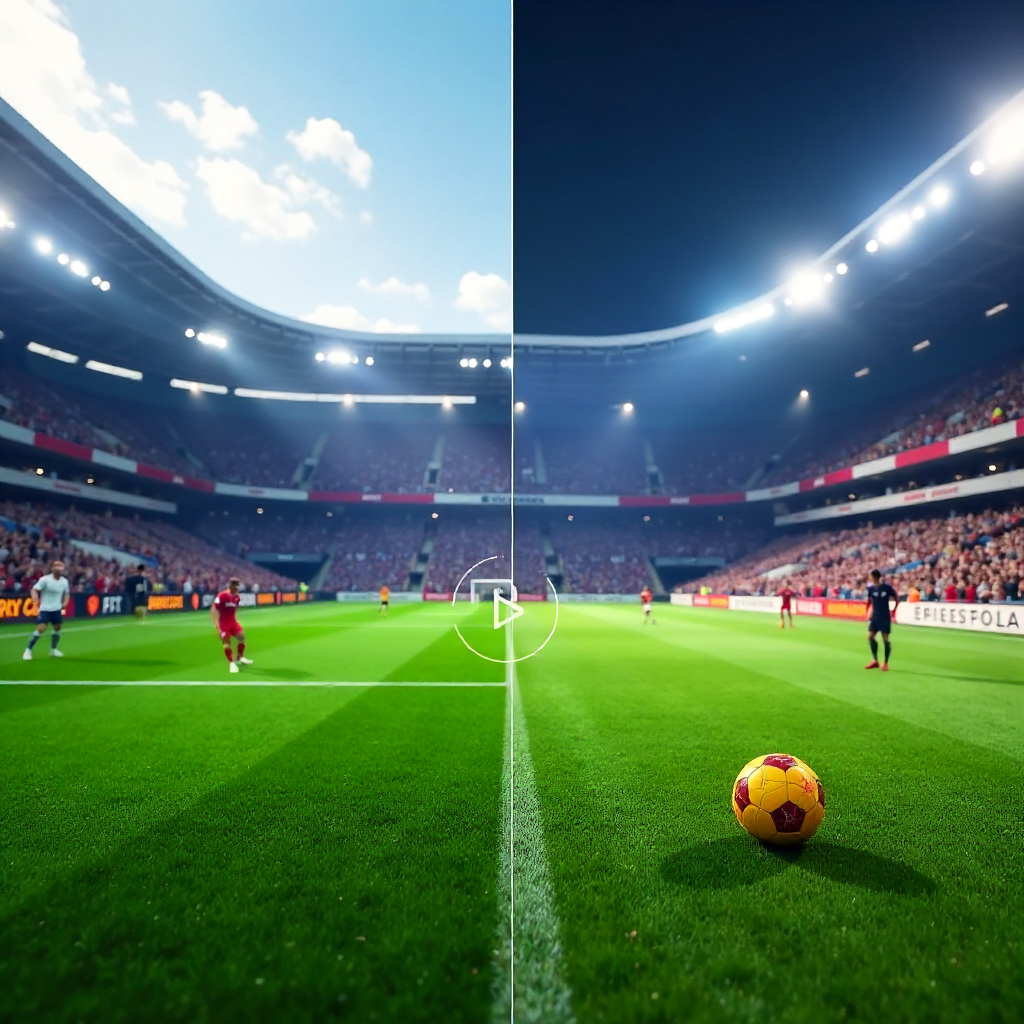
In-Depth Review: FIFA 26 vs eFootball 2026 – Which Reigns Supreme?
Introduction – Overview of both titles and their evolution in 2026
FIFA 26 and eFootball 2026 are the flagship football video games of the year, each representing distinct philosophies and innovations in sports gaming. FIFA 26 continues EA Sports' legacy of immersive realism and licensed authenticity, while eFootball 2026 pushes the boundaries of free-to-play evolution with a focus on dynamic gameplay and cross-platform esports.
Both titles have undergone significant upgrades this year, aiming to capture the hearts of casual gamers, competitive esports players, and football enthusiasts alike. Understanding the unique strengths and limitations of each game requires examining their core mechanics, presentation, and community engagement.
Gameplay and Controls – Detailed comparison of controls, realism, and innovations
Gameplay mechanics in FIFA 26 and eFootball 2026 differ fundamentally, catering to varied player preferences. FIFA 26 features refined, responsive controls with advanced ball physics and contextual animations that create an authentic on-pitch feel. Its realism enhances tactical play, rewarding precise passing, controlled dribbling, and intelligent positioning.
Conversely, eFootball 2026 emphasizes a faster, more fluid style with intuitive control schemes designed to appeal to both casual and competitive audiences. Its innovations include a revamped combo attack system and adaptive AI defenders that challenge players to think creatively.
While FIFA offers granular control over player movement and skill moves, eFootball balances accessibility with depth, making it easier for newcomers yet still demanding at high-level play. Players seeking a simulation-driven experience may gravitate towards FIFA 26, whereas those preferring arcade-style intensity might prefer eFootball 2026.
Visuals and Audio – Assessment of graphics, animations, and sound design
FIFA 26 delivers top-tier graphics and presentation, using next-gen engines for lifelike player models, stadium atmospheres, and smooth animations. The attention to detail extends to facial expressions, kit textures, and realistic lighting effects that elevate immersion. Its audio design also shines with authentic crowd chants, tactical commentary, and stadium ambiance enhancing the spectator feel.
eFootball 2026, while visually impressive, adopts a more stylized art direction with sharper animations focused on fluidity rather than photorealism. Its audio matches the fast-paced gameplay, featuring punchy sound effects and energetic commentary tailored to esports broadcasts.
FIFA 26 arguably leads in pure graphical fidelity and presentation polish, but eFootball 2026’s design prioritizes performance optimization across multiple platforms without sacrificing competitive clarity.
Online and Esports Features – Analysis of multiplayer modes, matchmaking, and competitive scene
Online multiplayer modes form a cornerstone for both games, but their approaches diverge significantly. FIFA 26 offers robust matchmaking with stable netcode, ranked seasons, and a popular Ultimate Team mode that blends player customization with market mechanics. Its esports tournaments are well-established, hosting premier global events with substantial prize pools and wide community backing.
eFootball 2026 adopts a free-to-play model focused on asynchronous multiplayer and cross-platform compatibility. Its matchmaking system leverages skill-based ranking and seasonal ladders designed to keep competition intense yet accessible. The esports scene around eFootball is rapidly growing, championing innovative tournament formats and global qualifiers that integrate seamlessly with the online ecosystem.
Thus, FIFA 26 offers a more traditional, polished competitive infrastructure, while eFootball 2026 pushes forward with novel community engagement and evolving esports formats.
Licensing and Teams – Review of club, league, and national team availability
Licensing remains one of FIFA 26’s strongest assets. The game features an extensive roster of licensed clubs, leagues, and national teams — including official kits, player likenesses, and stadiums. This breadth of licensing satisfies fans eager to play with authentic squads from the Premier League, La Liga, Bundesliga, and more.
In contrast, eFootball 2026 has made strides in acquiring licenses but still lags behind FIFA in total coverage. It offers select top clubs and international teams but relies on generic or unlicensed squads for many leagues. However, eFootball allows more flexible player customization and modding, enabling users to create or share community-made teams and kits.
For pure authenticity and comprehensive licensed content, FIFA 26 holds a clear advantage. Yet, for those who value customization and a growing licensed library without upfront costs, eFootball 2026 presents an evolving alternative.
User Experience and Accessibility – How beginner-friendly and customizable each game is
FIFA 26 provides a user interface and controls optimized for both newcomers and veterans, with customizable difficulty settings and tutorials to ease players into complex gameplay mechanics. The game's menus are streamlined, with intuitive navigation through career modes, multiplayer, and team management.
eFootball 2026 focuses heavily on accessibility, adopting a minimalist UI and simplified controls to welcome casual players. Its free-to-play nature lowers barriers to entry, while comprehensive customization tools allow for personal expression, from player appearances to tactics. However, some users may find eFootball’s monetization and progression systems less straightforward compared to FIFA.
Both games succeed in catering to a diverse player base, though FIFA’s polished presentation and support make it particularly friendly for newcomers wanting a deep experience, while eFootball excels at quick gameplay and community-driven customization.
Conclusion and Final Verdict – Summary of strengths, weaknesses, and overall recommendation
Both FIFA 26 and eFootball 2026 offer compelling football gaming experiences but target slightly different audiences and priorities. FIFA 26 excels in realistic gameplay mechanics, unmatched licensing and team authenticity, and a mature esports ecosystem. It suits players seeking immersive simulation, detailed control, and comprehensive official content.
On the other hand, eFootball 2026 stands out with its dynamic, fluid gameplay, accessible controls, and growing cross-platform multiplayer appeal. Its evolving esports scene and flexible user customization attract players who favor innovative formats and community engagement without a high upfront cost.
Choosing the right game depends on what matters most. For pure football simulation with rich graphical fidelity and official clubs, FIFA 26 reigns supreme. For those prioritizing accessibility, experimental gameplay, and free-to-play options, eFootball 2026 offers a strong alternative worth exploring.
FAQ
Which game has better online community support?
FIFA 26 benefits from a larger, well-established online community built over decades, with stable servers and extensive matchmaking options. eFootball 2026’s community is rapidly expanding, especially among younger and free-to-play players, but it is still maturing its infrastructure and features.
Can casual players enjoy both FIFA 26 and eFootball 2026?
Yes, both games cater to casual gamers. FIFA 26 offers adjustable difficulty and tutorial modes to ease players in, while eFootball 2026’s simplified controls and free-to-play model make jumping into matches straightforward. Casual gamers may find eFootball less intimidating as a starting point.
How do the esports scenes differ between the two games?
FIFA 26 hosts traditional, highly polished esports tournaments with large prize pools and global reach, supported by official leagues and sponsors. eFootball 2026’s esports focus is more experimental, with innovative tournament structures, cross-platform qualifiers, and a community-driven approach to competition.
Are there significant differences in licensing between FIFA 26 and eFootball 2026?
Yes, FIFA 26 remains the leader in licensing, covering the majority of major clubs, leagues, and national teams worldwide. eFootball 2026, though improving, has fewer licenses and relies more on community customization and generic teams.
Which game offers better value for money?
eFootball 2026 is free-to-play, offering immediate access without upfront purchase, making it highly cost-effective. FIFA 26 requires a purchase but delivers a polished, content-rich experience with regular updates, justifying its price for many players seeking depth and authenticity.