VAR Technology: How It\'s Changing the Game in Real Football and on the Virtual Pitch
What Is VAR and Why Does It Matter?
VAR (Video Assistant Referee) is a technology system that allows a team of match officials to review key decisions during a football match using video footage. Introduced into professional football at the elite level around 2018, it was designed to correct clear and obvious errors in four main decision categories: goals, penalty decisions, direct red cards, and mistaken identity.
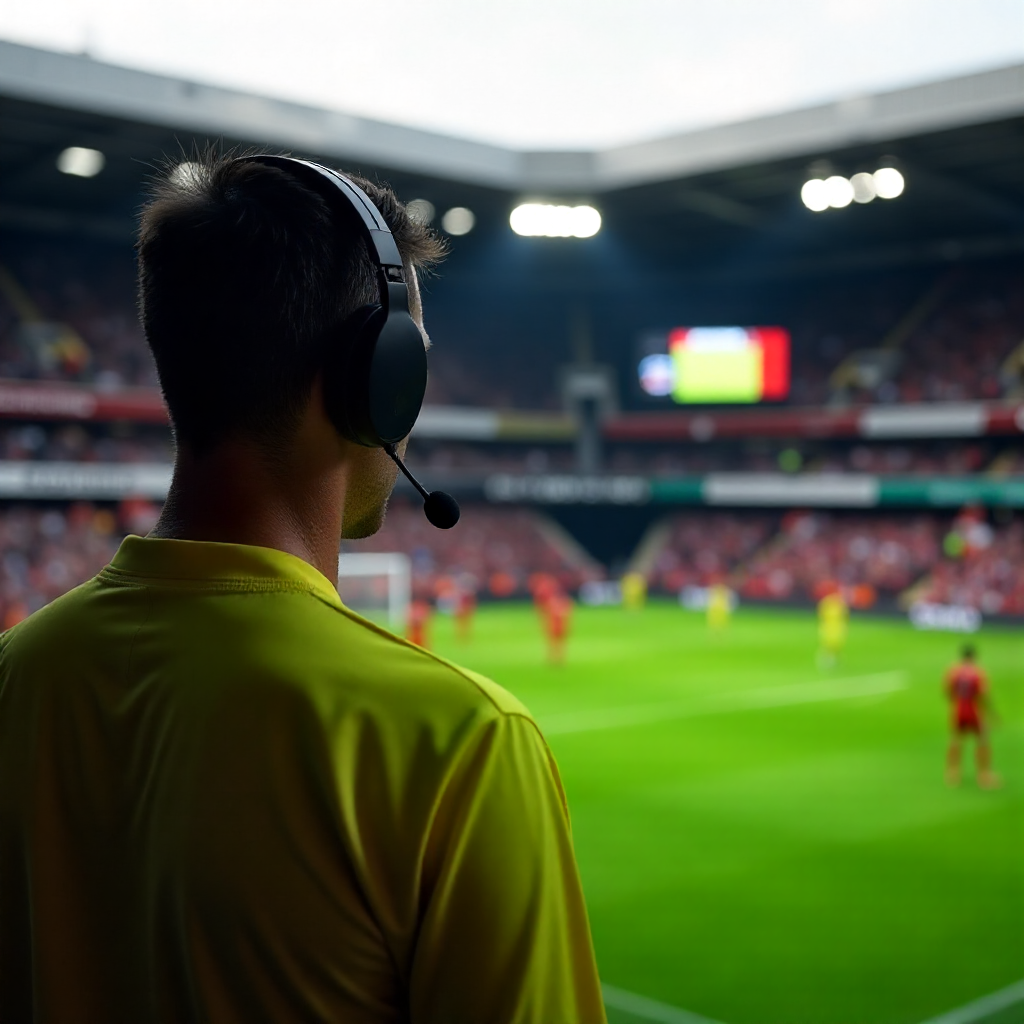
The idea sounds straightforward. A goal is scored, a flag stays down, then the referee gets a tap in the earpiece — and suddenly 60,000 fans are staring at a screen waiting for a verdict. For anyone who follows football closely, that moment of suspended celebration has become one of the defining experiences of the modern game.
For gamers, VAR represents something slightly different: a signal that football simulation is pushing toward ever-greater realism. When the real sport changes its rules and processes, the virtual version tends to follow. That crossover is exactly what makes VAR worth examining from both sides of the fence.
VAR in Real Football — The Case For and Against
VAR has genuinely improved officiating accuracy in professional football leagues — but it has also introduced a new kind of tension that not everyone appreciates. The trade-off is real and worth naming honestly.
On the positive side, clear errors do get corrected. Goals that would have stood despite an obvious handball, or red cards issued to the wrong player, can now be reversed before they define a season. For clubs fighting relegation or chasing a title, that accuracy matters enormously.
The friction comes from how it feels in the stadium and at home. Fan experience has taken a hit in ways that are hard to ignore. Spontaneous goal celebrations get frozen mid-air. Matches develop a stop-start rhythm that disrupts momentum. And because the technology is only supposed to correct "clear and obvious" errors, fans often find themselves watching lengthy reviews that end with the original decision standing anyway.
There's also the offside rule problem. Semi-automated offside systems now draw lines across a frozen frame to determine whether a player's armpit was marginally ahead of a defender. Technically accurate, perhaps. But it produces outcomes that feel disconnected from the spirit of the game — and that disconnect has fueled the most heated debates in football culture over the past several years.
The Most Controversial VAR Moments That Changed Football Culture
The decisions that generate the most controversy tend to cluster around three areas: offside calls, handball rulings, and penalty decisions. Each one exposes a different limitation of the technology.
Offside reviews have become particularly divisive. The precision of body-part tracking means that goals are now ruled out for margins that are genuinely invisible to the human eye. Critics argue this breaks one of football's unwritten contracts — that a goal should look like a goal before it's disallowed.
Handball decisions sit in similarly murky territory. The rules around what constitutes an accidental handball have been rewritten multiple times since VAR's introduction, partly because the technology revealed how often hands make contact with the ball in ways that were never previously detectable. Referees and fans are still navigating what the rule actually means in practice.
Penalty calls are where VAR generates the most raw emotion. A foul that might have gone unnoticed in real time becomes a frame-by-frame analysis. Some reviews feel like justice. Others feel like the game being policed at a level of granularity that removes human judgment entirely — and with it, some of the drama that makes football compelling.
How Football Video Games Handle Referee Technology
Football simulation games have incorporated VAR in limited but increasingly realistic ways. Most major titles now include VAR as an optional feature in their career and match modes, allowing players to toggle it on or off depending on how authentic an experience they want.
When it works well, the in-game VAR system adds genuine tension. A goal you've just scored might get flagged for review, the stadium atmosphere shifts, and you wait — just like in real life. For players chasing maximum game immersion, that moment lands surprisingly hard.
The limitations are also familiar. AI referee logic doesn't always apply the offside rule consistently, which means VAR reviews in-game can feel arbitrary rather than precise. Handball decisions in particular remain difficult to simulate convincingly, because the physics engine and the rulebook don't always agree on what counts as intentional.
What's interesting is that the inclusion of VAR in football games has sparked genuine debate among players about realism versus enjoyment — the same debate happening in real football. Many competitive online players switch VAR off entirely, finding that it disrupts the flow of a match in ways that feel punishing rather than fair. That preference mirrors what plenty of football fans say about the real thing.
VAR in Esports — Does It Have a Role in Competitive Gaming?
Esports doesn't have VAR, but it has something functionally similar: replay review systems and tournament officiating protocols that allow disputed calls to be examined after the fact. The parallel isn't perfect, but it's worth exploring.
In competitive gaming, most disputes center on technical issues — lag, server errors, client crashes — rather than judgment calls. Tournament organizers typically have replay files and server logs that can be reviewed to determine whether a result should stand. In that sense, the infrastructure for video-assisted review already exists in esports, even if it isn't branded the same way.
Where the comparison gets interesting is in games that simulate football. Esports competitions built around football simulation titles face the same officiating questions as real football: what happens when an AI referee makes a clearly wrong call that affects a match result? Currently, most organizers treat this as a technical fault and replay the affected sequence. A more formalized VAR-style review system for football esports is a logical next step as the competitive scene matures.
Anti-cheat mechanisms in esports serve a different but related purpose — they ensure competitive fairness at a systemic level, catching rule violations that human observers might miss. The philosophy behind VAR and behind esports anti-cheat is the same: use technology to reduce the impact of human error on outcomes that matter.
Does VAR Make Football More or Less Fun — In Real Life and in Games?
Honestly, the answer depends on who you ask and what they value most. VAR improves accuracy but costs spontaneity — and different audiences weight those things differently.
Live football viewers who prioritize fairness tend to accept VAR's disruptions as a necessary cost. Fans who come to the game for atmosphere and emotion often find the delays genuinely deflating. Neither group is wrong. The technology solves one problem while creating another, and there's no version of VAR that satisfies everyone.
In gaming, the dynamic shifts slightly. Players have control that live audiences don't — they can turn VAR off. That option matters. It means football games can serve both the realism-seekers and the people who just want to score a last-minute winner without waiting for a review. The ability to customize that experience is one area where gaming actually handles VAR better than real football can.
The broader cultural impact is worth noting. VAR has made football fans more analytically minded, more aware of the rules, and more vocal about officiating. That same energy shows up in gaming communities, where players now debate referee AI with the same intensity they bring to real match analysis. In that sense, VAR has changed how people engage with football — on and off the pitch.

The Future of VAR — Smarter Tech, Smoother Decisions?
The next generation of VAR will almost certainly be faster and more automated. Semi-automated offside technology is already reducing the time reviews take in top leagues, and the direction of travel is toward near-instant decisions that don't interrupt match flow.
Improved technology in sports will likely address the two biggest complaints: delay and inconsistency. If a review takes three seconds instead of three minutes, the fan experience changes dramatically. If the handball rule gets simplified to match what the technology can actually measure reliably, the controversy around those decisions should decrease.
For football video games, the implication is that VAR simulations will become more seamless as the real-world system improves. Developers tend to model their referee systems on current regulations, so faster and cleaner VAR in real football should translate into faster and cleaner VAR in gaming within a few development cycles.
Whether VAR will ever be universally loved is a different question. Some fans will always prefer the rawness of a game decided by human judgment, imperfections included. But as a tool for reducing clear and obvious errors at the highest level of the sport, VAR is here to stay — and its influence on how we experience football, both live and through a screen, will only grow.
Frequently Asked Questions
What does VAR stand for and how does it work in football?
VAR stands for Video Assistant Referee. It works by having a dedicated team of officials review match footage in a video operations center, communicating with the on-field referee via headset to flag potential errors in goal decisions, penalty calls, red cards, and mistaken identity situations.
Do football video games include VAR features?
Yes, major football simulation titles now include VAR as an optional gameplay feature. Players can activate it for added realism or disable it to keep matches flowing without interruption. The implementation varies in quality, with offside and handball calls being the most inconsistently simulated.
Has VAR made football fairer or more controversial?
Both, depending on the decision type. VAR has reduced clear errors in goal and red card decisions, improving accuracy. At the same time, it has generated more controversy around offside and handball calls, where the precision of the technology produces outcomes that feel counterintuitive to many fans.
How do esports handle disputed calls or decisions?
Esports competitions typically use replay files and server logs to review disputed results, particularly when technical issues affect match outcomes. For football simulation esports, AI referee errors are usually handled as technical faults, with affected sequences replayed. A formalized review system similar to VAR is not yet standard practice.
Will VAR technology improve in future football seasons?
Yes. Semi-automated systems are already reducing review times in top leagues, and further automation is expected to make decisions faster and more consistent. The FIFA football technology standards page outlines the ongoing development roadmap for VAR and related officiating tools.